
It’s already been six months since we shared the Feather 2.0 roadmap. New features and a new design sound exciting, but building them is a very different challenge. Development is moving along smoothly, but we won’t be able to meet the update date we originally promised.
There are many reasons, but one of the biggest lies in engineering completeness, especially the design of the rendering engine. For example, we’re fully aware that transparency in Feather does not currently render exactly as users intend. In the computer world, “transparency” is one of those oddly mysterious concepts.
In theory, you could trace light rays to achieve glass-like realism, but that approach demands an enormous amount of computing power. That simply isn’t an option for Feather. Because Feather prioritizes a natural drawing experience, all of this has to happen in real time. Within limited computational resources, this means we must design the rendering order and processing passes for distance-based transparency with extreme care and precision.
We’re investing a great deal of effort into solving this, but the depth of knowledge required and the complexity of the design mean it’s taking longer than we initially expected.
We wish we could show this to all the many Feather artists and designers sooner. For now, we’ll share a small glimpse of what Feather 2.0 looks like.
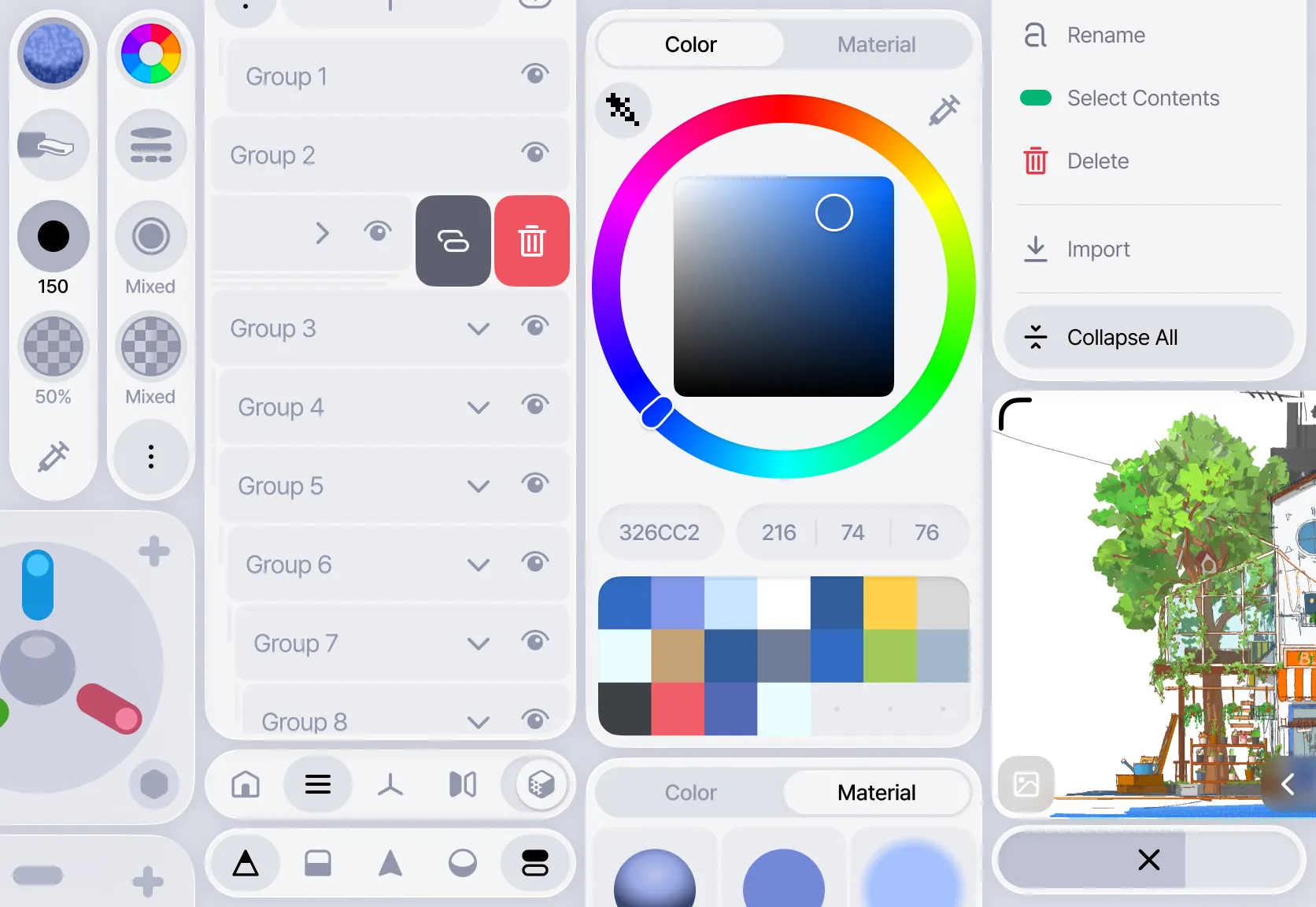
What's New
One of the most exciting things about the new Feather is the dramatic leap in performance. Starting with version 2.0, we’re replacing the entire codebase with a new one designed to fully unlock the iPad’s potential.
This means faster rendering, the ability to handle more objects, and a much more stable experience, along with plenty of new features along the way.
Bucket fill
The bucket fill tool is probably one of the most requested features we’ve ever had. It has consistently stayed at the very top of our request list, quite literally earning its place on the bucket list. When designing this feature, we focused on two key priorities.
The first is a natural drawing experience. Feather’s 3D bucket fill tool needs to feel just as fluid as drawing curves, following the movement and intent of your hand while still capturing subtle, precise touches.
The second is optimization. The result should look natural to the eye, while maintaining a level of structural efficiency that makes the data genuinely useful. This opens the door to more extended workflows, such as reusing filled areas as 3D guides in the future.
Brush customization
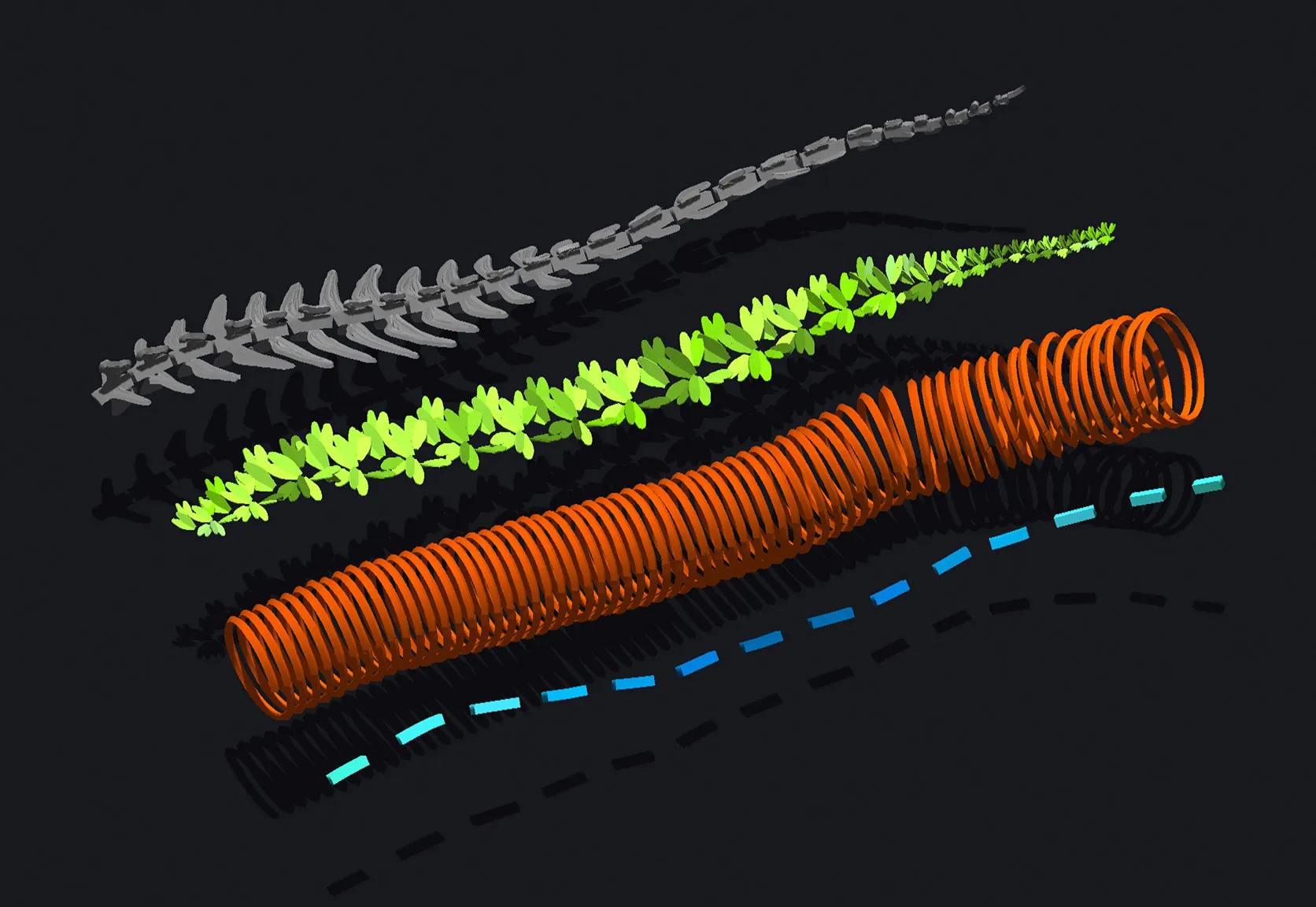
Brush customization is another area we couldn’t leave out. More types, more shapes, more sizes, and most importantly, it remains procedural at its core.
So what does “procedural” mean here? There are many ways to define it, but the way we see procedural brush customization is a bit more poetic.
Imagine drawing a stream of water. The detail and physical character of each droplet reflect very specific artistic intent. But guiding all of those droplets into a single flow takes only a few curves, and that flow represents the artist’s broader intention.
In Feather’s 3D brushes, those droplets are expressed through dozens of adjustable sliders and controls. The flow itself is defined by natural curves drawn with the Apple Pencil and 3D Guides. Feather 2.0’s brush customization is about giving you control over all of these elements.
That said, please don’t expect to draw perfect streams of water in the very first version. This will be our starting point, and reaching that level is something we aim to grow into through future updates.
Important updates
Our current target for the next update is Q1 2026. Depending on development progress, this could move slightly earlier or later. Thank you sincerely for your patience.
There’s one more important thing to note. Feather 2.0 will be a free update for existing Feather users, but it will require iPadOS 26 or later. This is because Feather 2.0 is built on the Metal 4 API, which is only supported on iPadOS 26 and above.
In other words, iPads that are not updated to iPadOS 26 will not be able to upgrade to Feather 2.0. Updating your device to iPadOS 26 will be required to use version 2.0.
About post-release support
Users who do not update to iPadOS 26 or later will still be able to continue using Feather version 1.3. Of course, the release of 2.0 does not mean that updates for 1.3 will stop entirely. While no new features will be added, we will continue to provide updates focused on stability and optimization.
We recommend taking your time to prepare before moving to Feather 2.0.
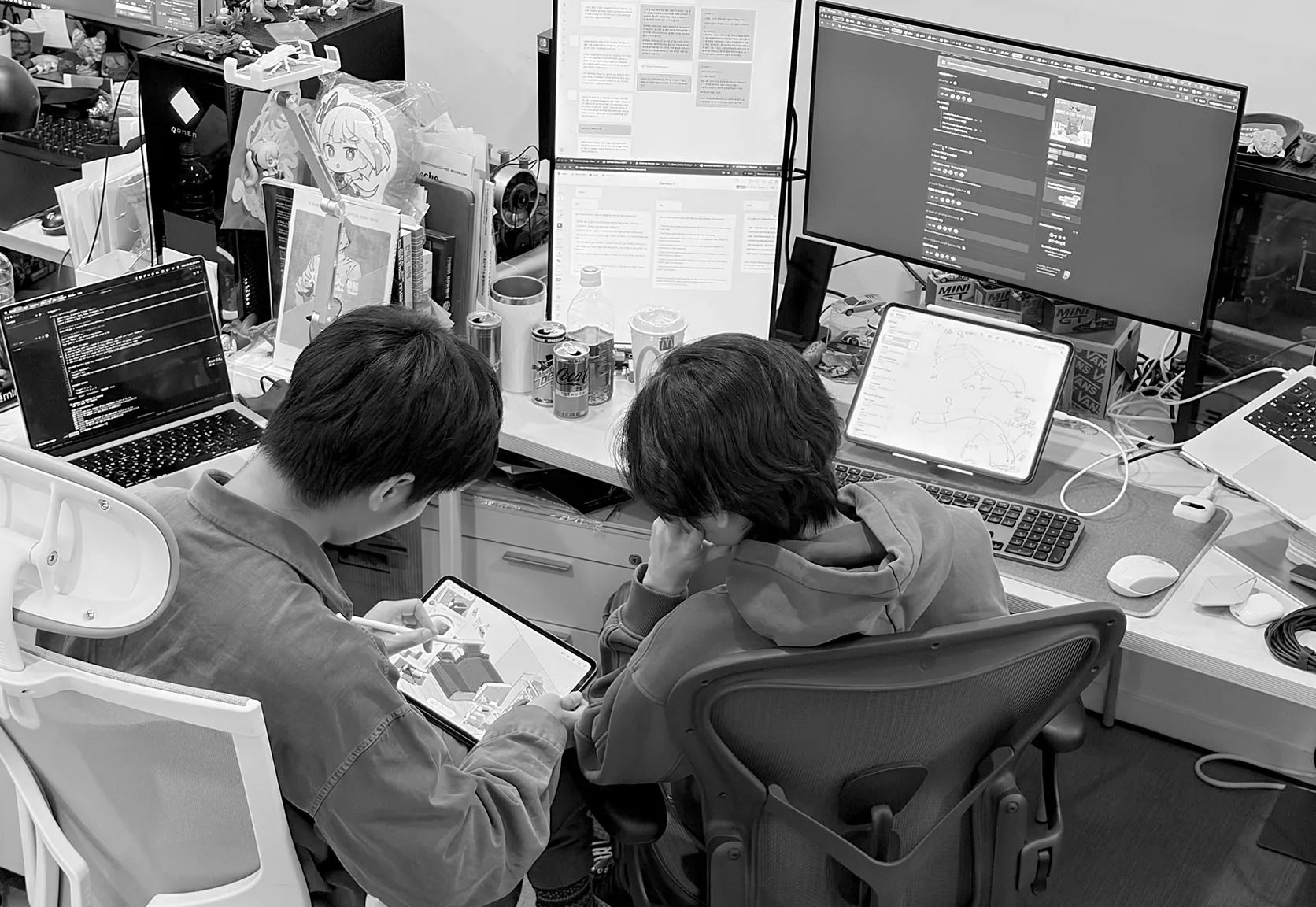
In a creative landscape where new possibilities are constantly being generated, placing trust in a shared vision through a tool like Feather is something truly meaningful. Thank you for being with us.
Even as we write this, intense discussions are happening in the room next door. We’ll keep doing our best to live up to that trust and give something meaningful back to everyone.