
November is almost here again. Somehow, it always ends up being a big month for us.
We began selling the first paid version of Feather in November two years ago. The following November was our target for releasing 2.0. We missed that target and announced a delay in December. Now, once again, November is the month we're looking toward to finish 2.0. It's beginning to feel as though every important thing in the world happens in November.
First, there's something we need to say to everyone waiting for 2.0. After postponing it once, we also missed the new target we shared for the first quarter of this year. We didn't do enough to keep you informed afterward. We're sorry for making you wait so long, and for taking so long to explain. We're now working toward finishing 2.0 in November.
On our desk sits a piece of software that feels familiar and a little strange at the same time. Its name is Feather, its version is 2.0, and its build is beta. Looking at it, we find ourselves thinking of all the Feathers we've made before. So much has changed, and some things haven't changed at all. It seemed like a good time to look back at every one of them.
That includes a few early versions from before Feather even had a name. We hope you enjoy the trip.
Alpha (2020–2021)
People encountering Feather for the first time still tend to say, “This is so new.” Show them how long we've actually been making it, and how different it used to look, and they're usually surprised.
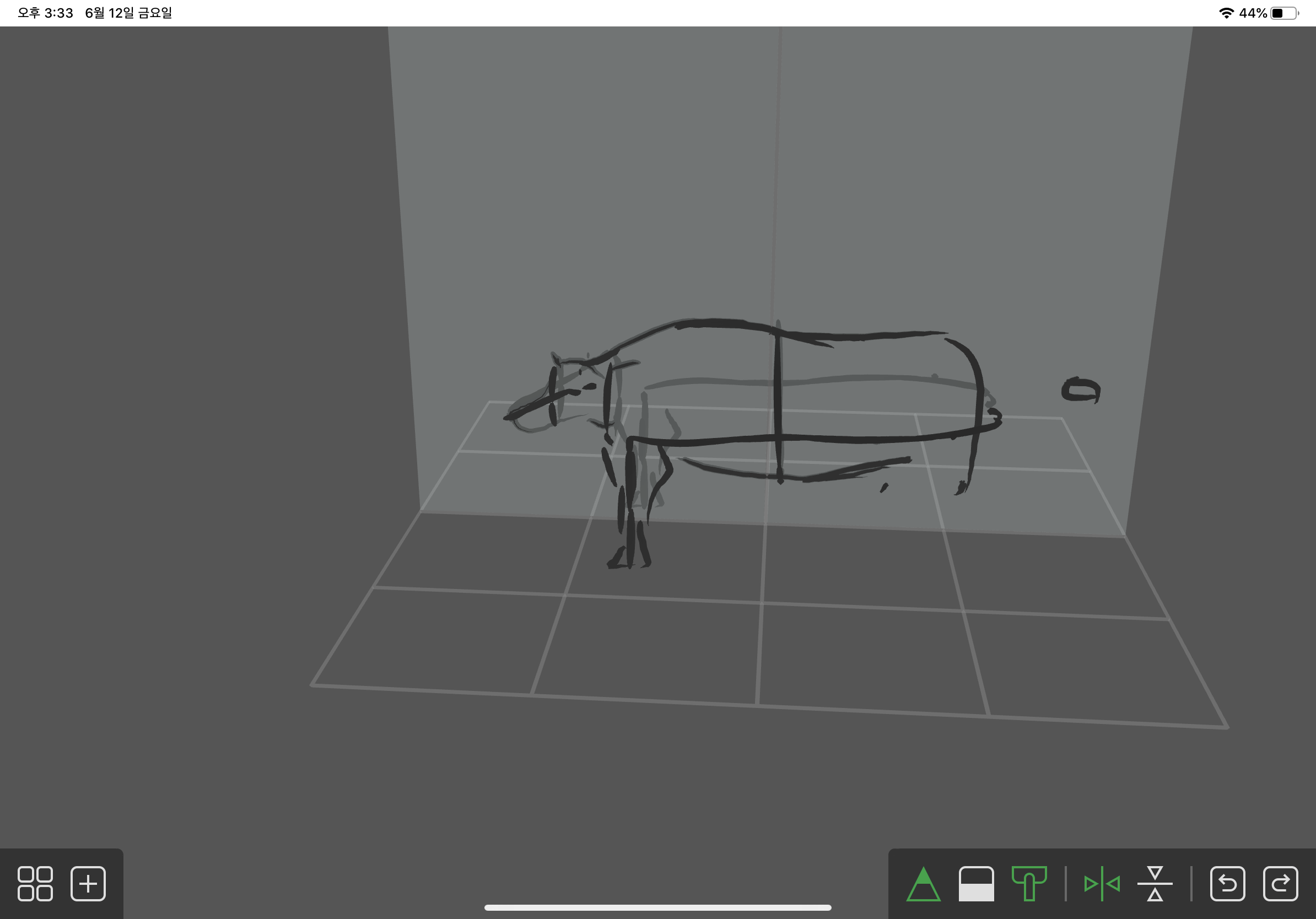
This is what Feather looked like in its early days. It wasn't called Feather yet, and it wasn't the very first version, either. There were countless experimental builds. The one above was among the earliest developed with a commercial product in mind.
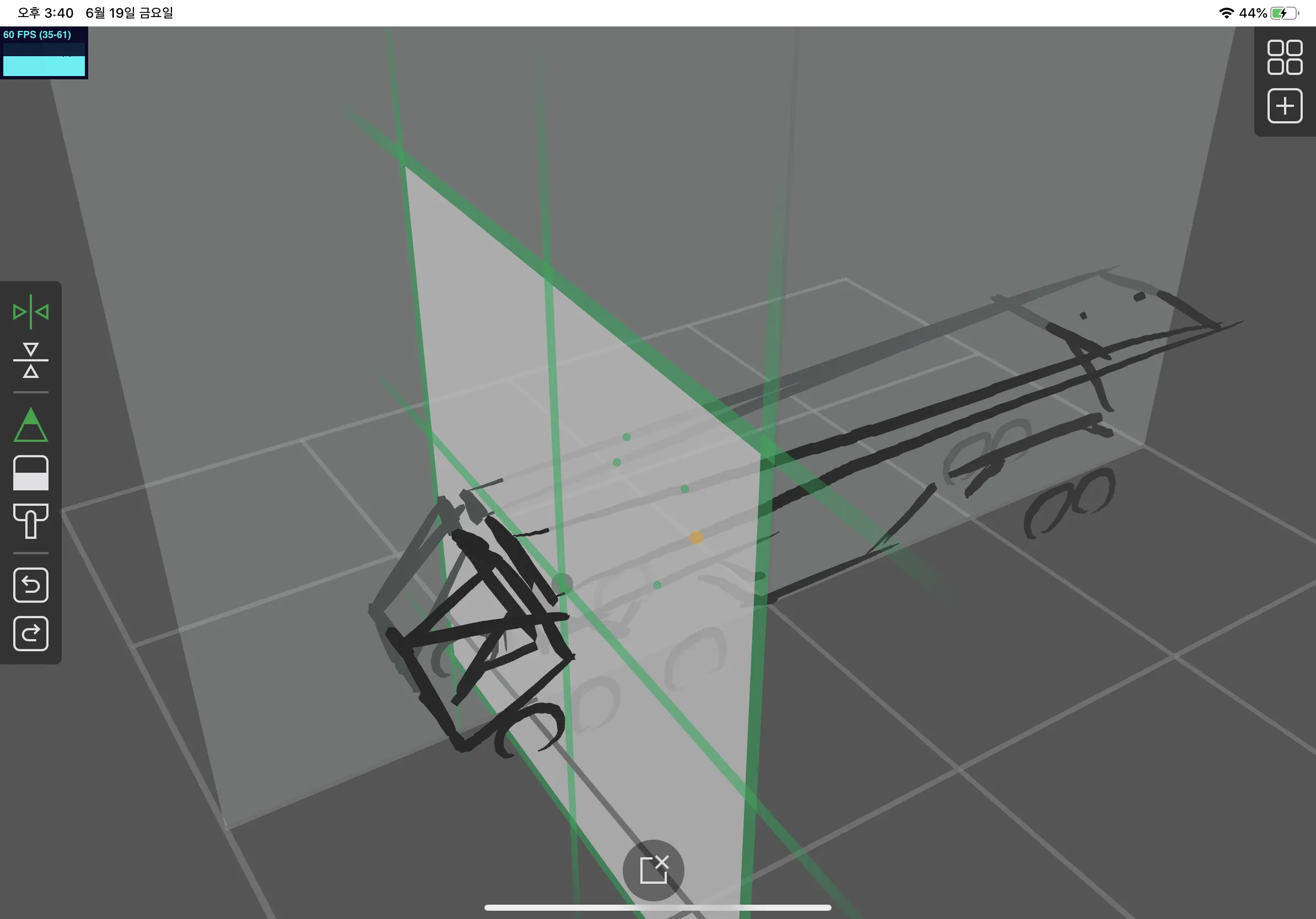
Do you see the unfamiliar green plane in the image above? Back then, there weren't many ways to draw a curve in 3D space. You could press and hold on the grid to create a plane, then draw a 3D curve on it. That method eventually disappeared when we came up with a way to draw the 3D Guides you'll recognize later in this story.
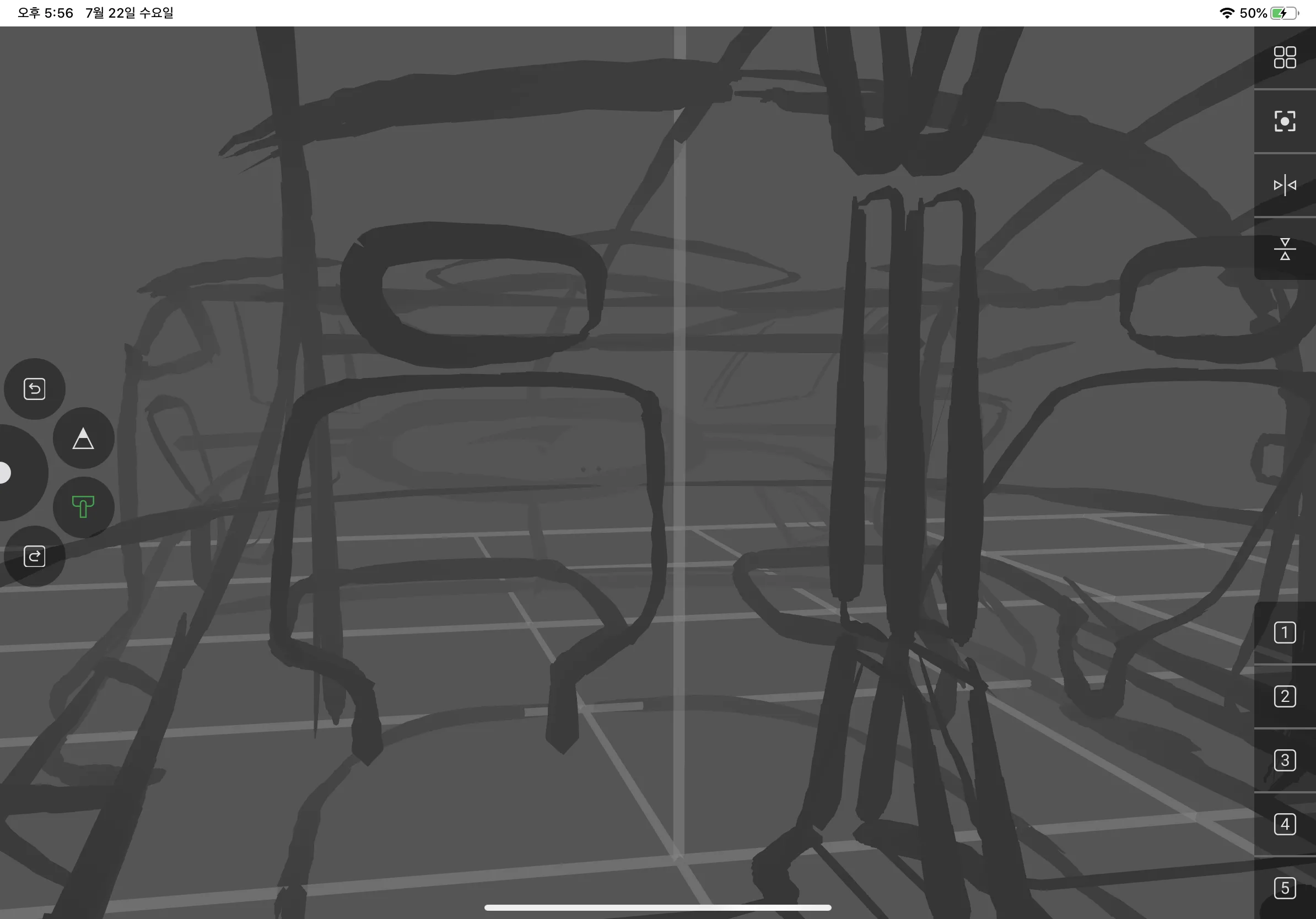
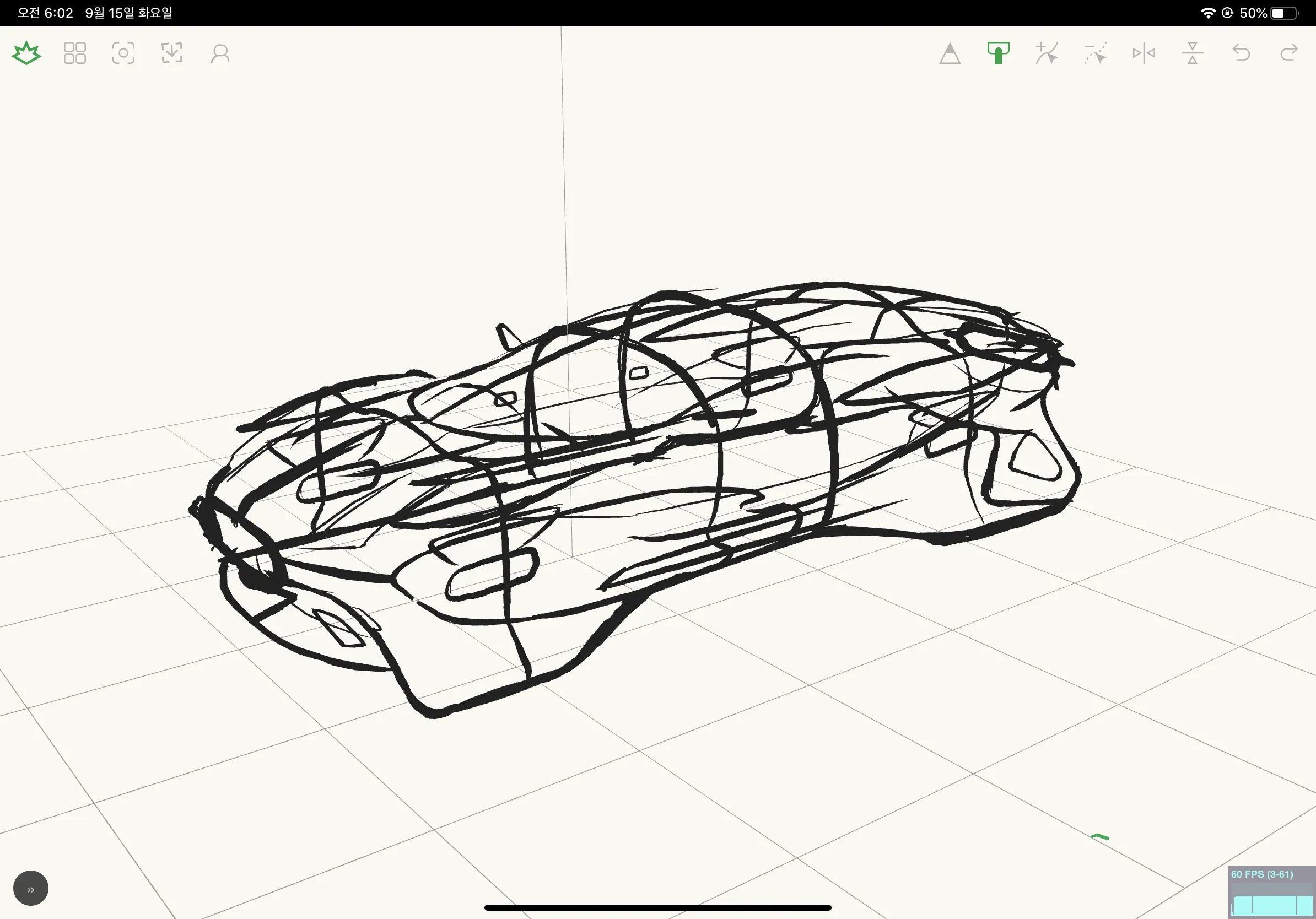
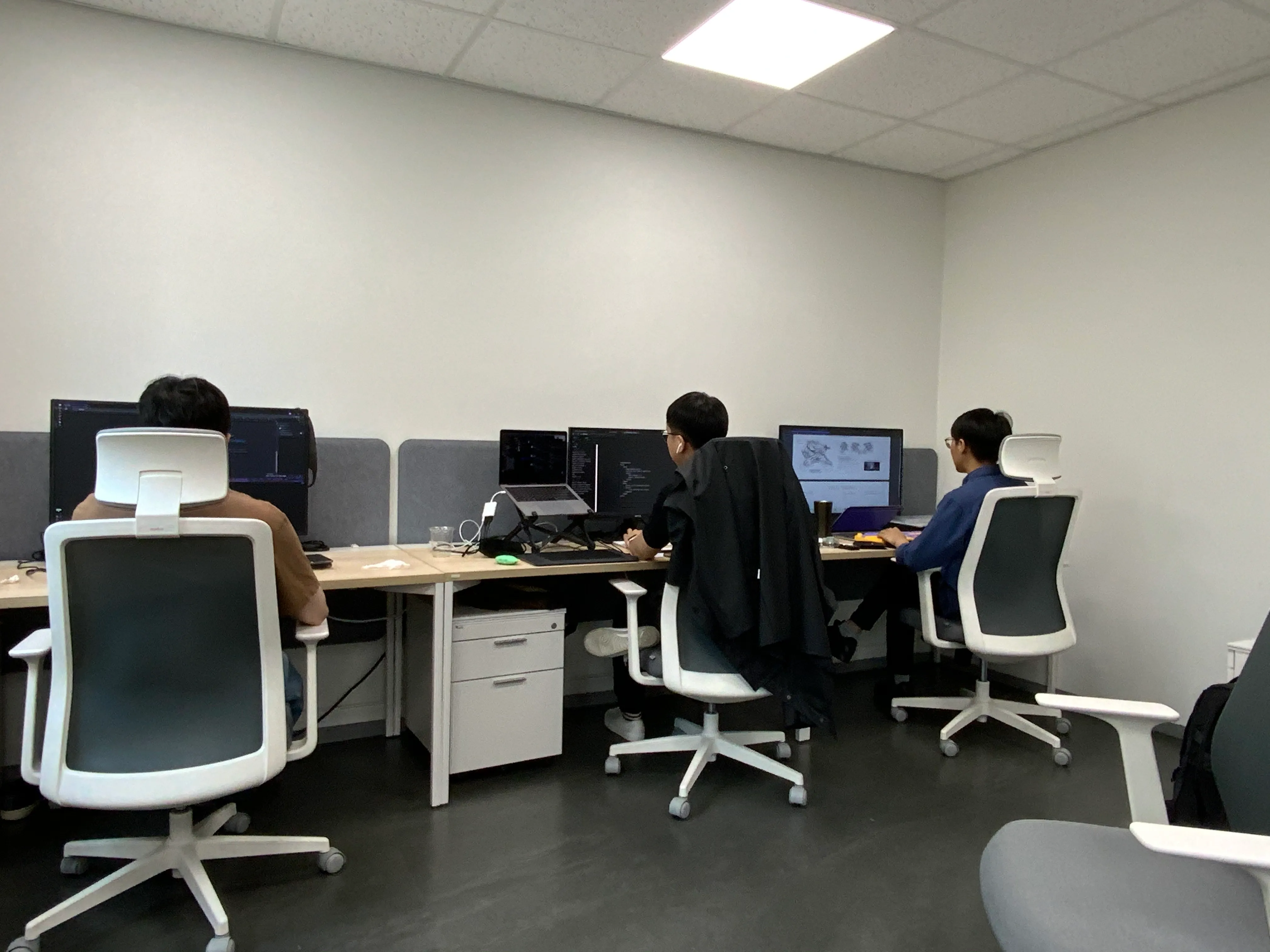
The way we drew 3D curves was different, but the basic framework of Feather took shape during this period. That was already more than six years ago.
Closed Beta (2021–2022)
In 2021, after testing Feather internally, we decided to share this new 3D drawing software with people around the world. We had some work to do first. We needed more essential features, a tutorial people could follow, and, most of all, a name.
That last decision wasn't easy. We spent nights filling a whiteboard with candidates. As you already know, we settled on Feather. For the record, the person writing this article suggested Datarunner. What do you think?
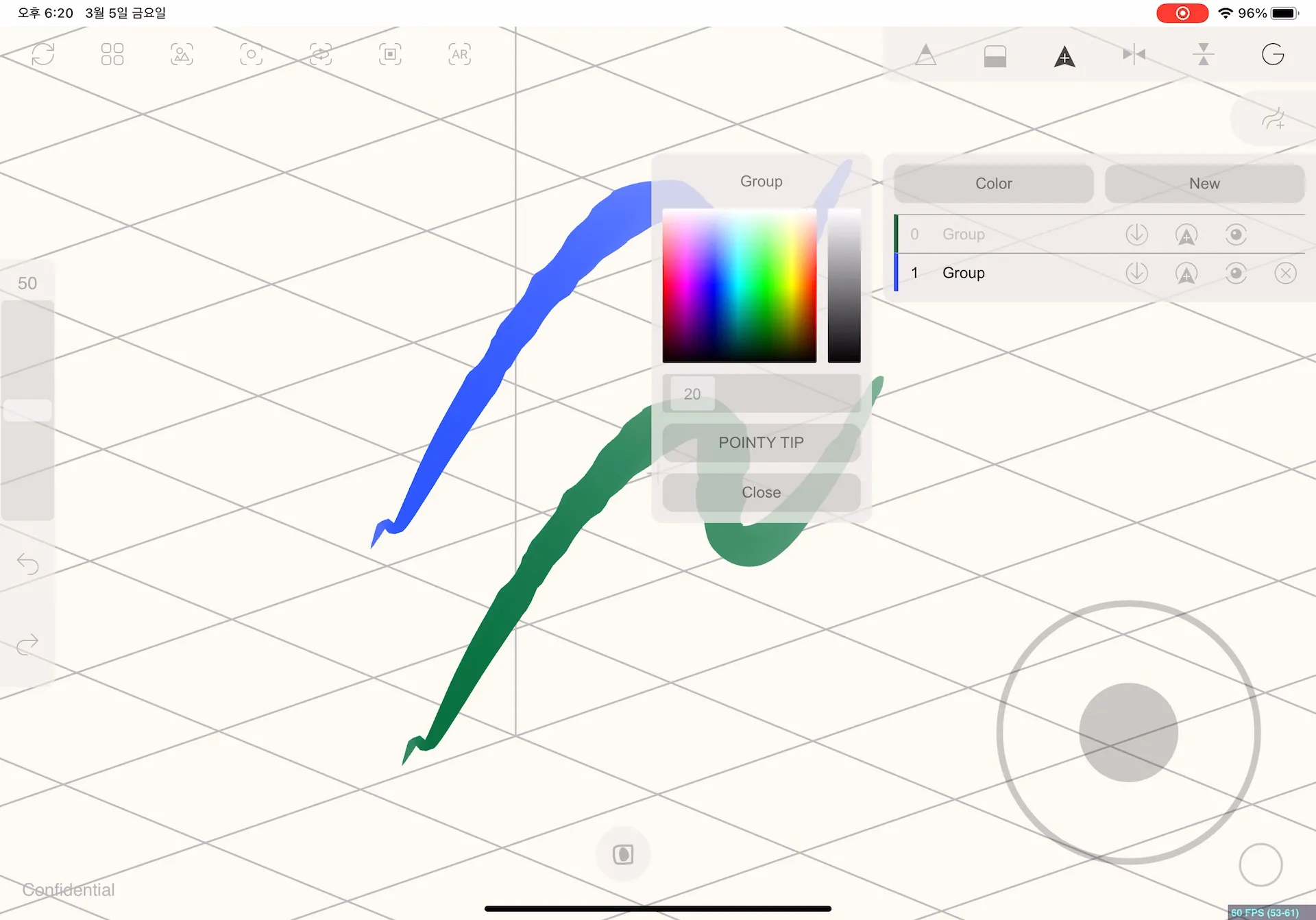
It had been about a year since we started developing Feather in earnest, and we'd tried quite a few things. Look at the color palette above: this was the first version that let you change the color of a curve. Before that, every sketch was monochrome.
But the palette is in an odd place, isn't it? That's because color belonged to a Group in this version. Draw a curve in the “red group,” and you got a red curve. Drawing a rainbow required seven groups. It looks strange now, but it was a developer's quickest answer to a tester who wanted to draw in color.
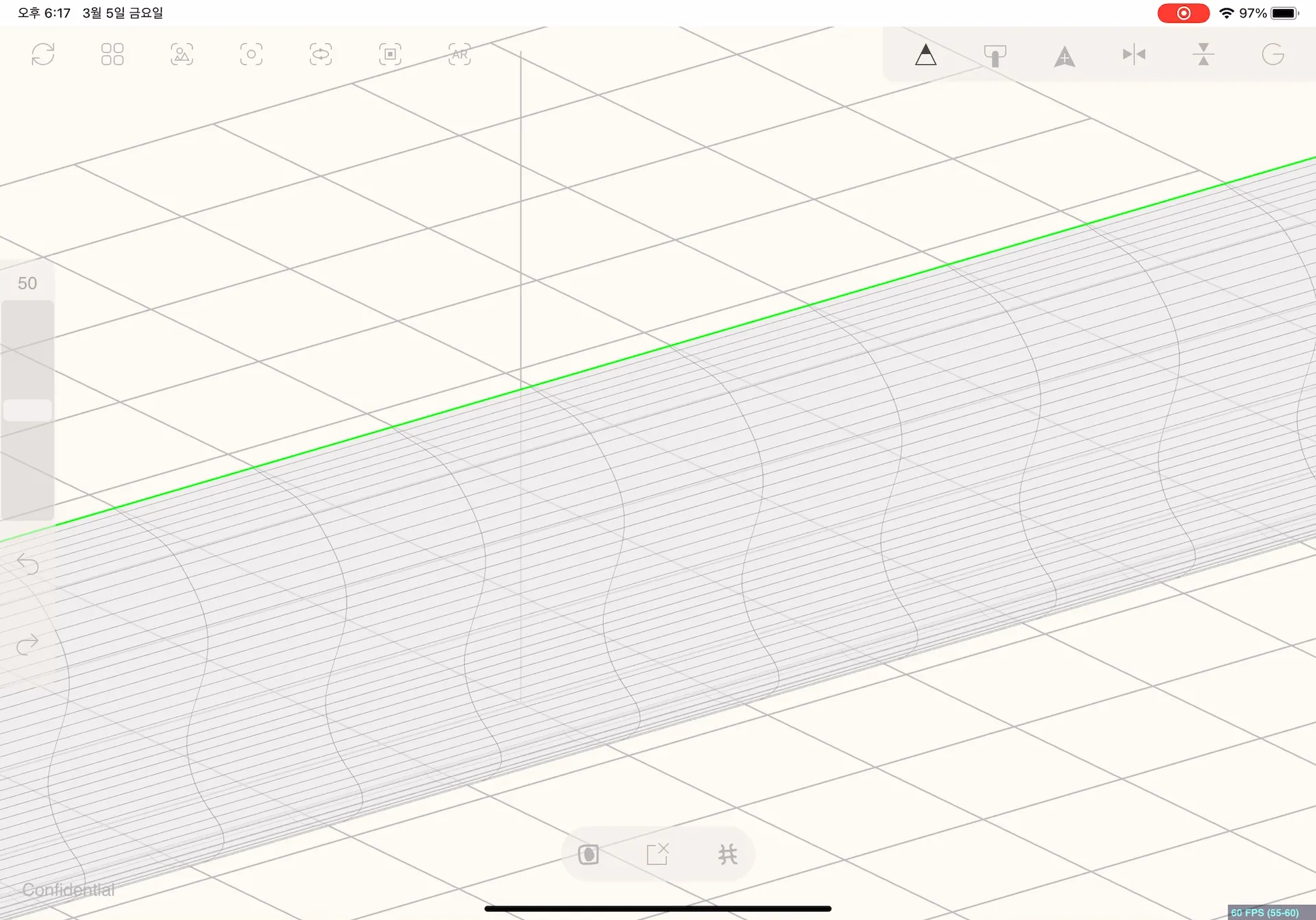
Once we had to show Feather to people other than ourselves, we could no longer take our time. A lot of features arrived during this period, including the idea of drawing a 3D Guide—a method many of you will recognize.
The designer who first proposed it wanted to draw a mouse for computer in Feather. Not just any mouse, but a sleek, ergonomic one that looked as though it would fit perfectly in your hand. Our early method of placing planes couldn't produce those flowing forms. We needed a new way to draw, and the drawable 3D Guide was the answer.
We didn't have a name for it at first, so we called it Jjuk-Jjuk-e (쭉쭉이)—roughly, “Stretchy.” Draw a curve and a surface would stretch out from it. Stretchy, you see? The name “3D Guide” came much later.
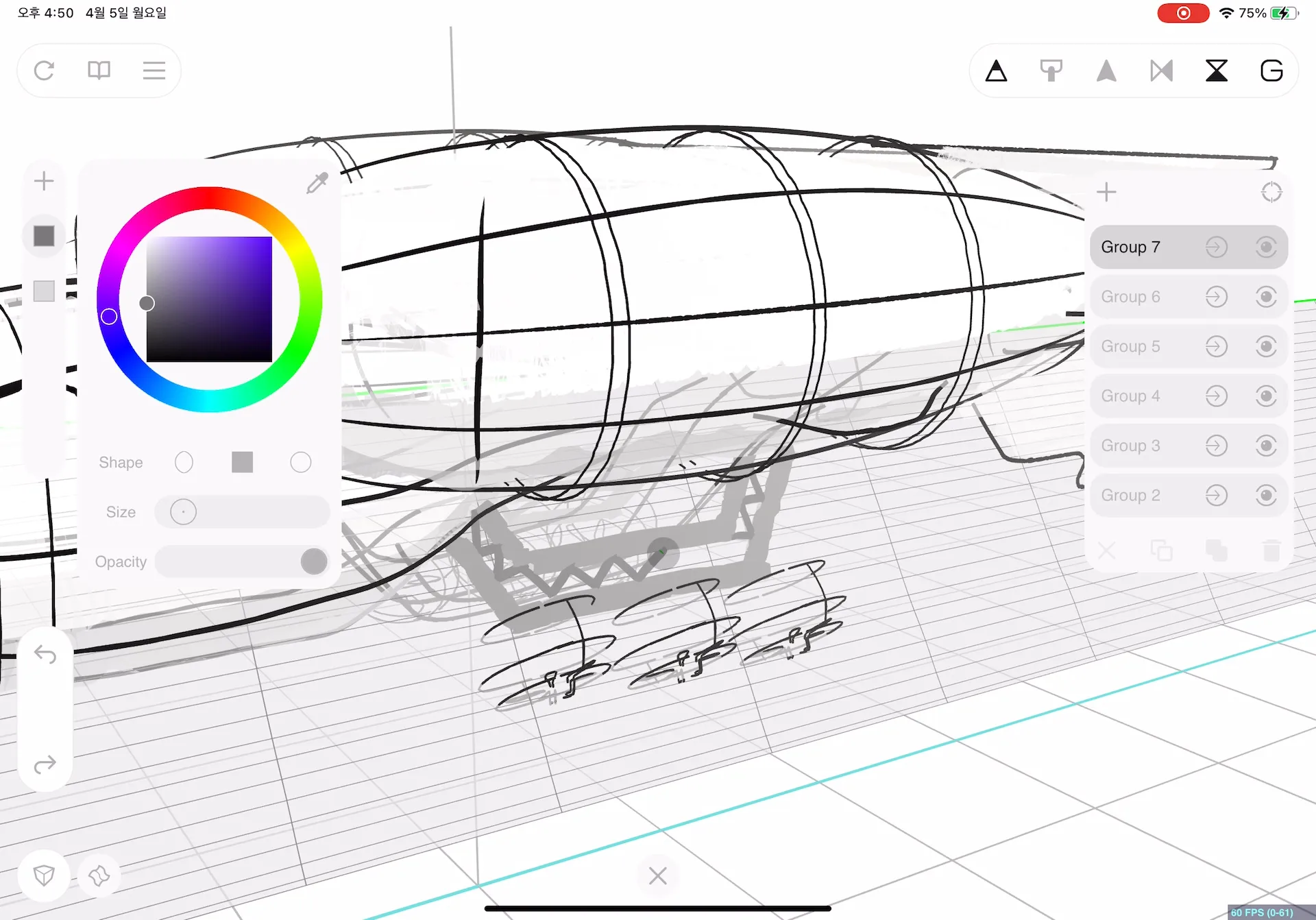
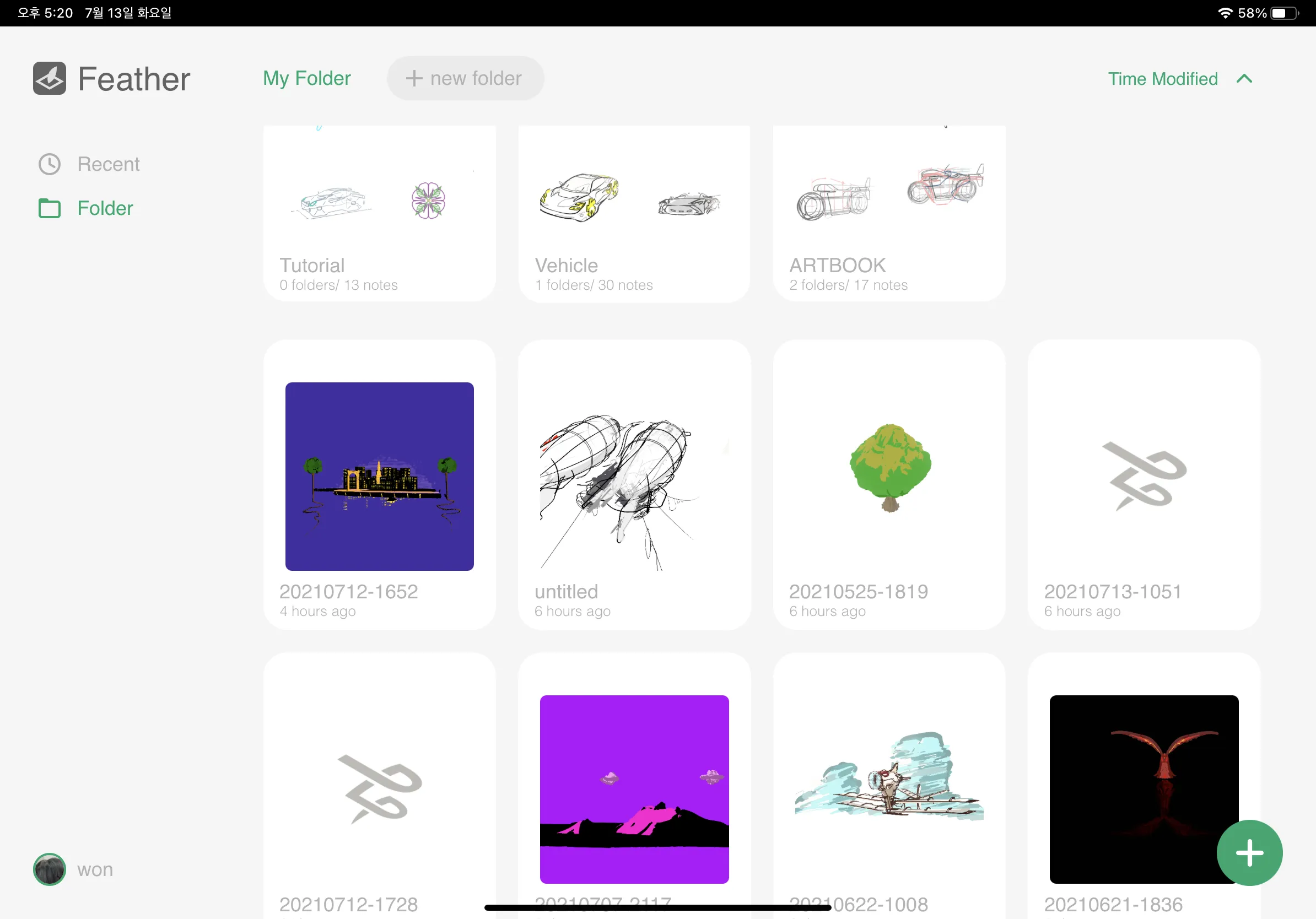
Feather's web beta went public in November 2021. Quite a few people who started using Feather then are still with us today. If this is your first time seeing it, you may be startled by just how rough the interface was.
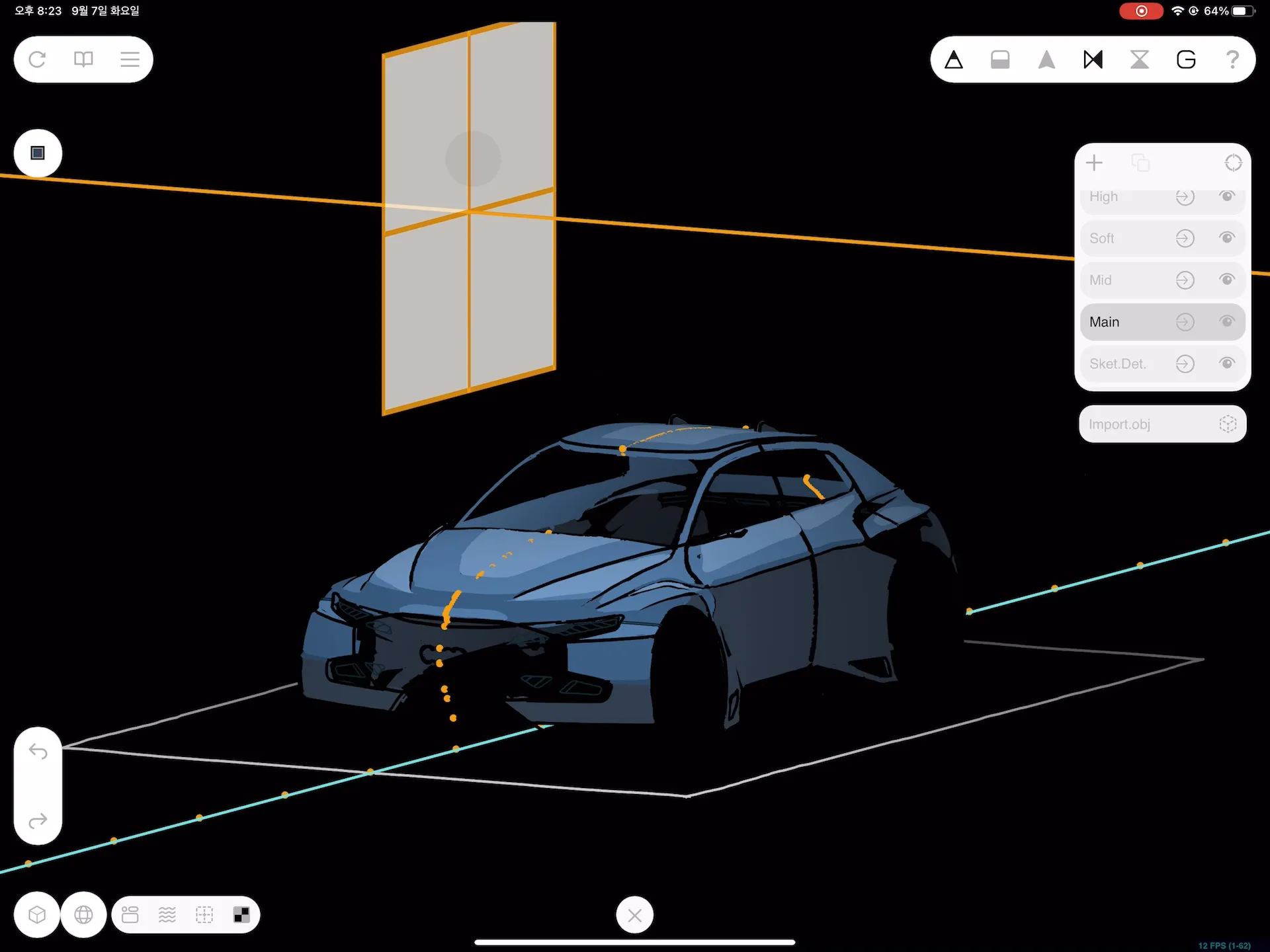
The original plane-placement method was still available, so the closed beta offered two ways to draw 3D curves. But the plane method was plainly less convenient than drawing a 3D Guide, and we soon began wondering what to do with it.
The image above shows one attempt to make it better. We highlighted the area where a plane overlapped the sketch in yellow, making its position easier to see. We kept trying new ideas and ran both methods side by side for a while, but the 3D Guide eventually replaced the plane method altogether.
Legacy Service (2022–2024)
The open beta ended in 2022, and the version number went back to 1.0.0. For the next two years, Feather was a free web app. We wanted it to reach as many people as possible. Until that service ended and the paid version arrived in November 2024, Feather changed significantly almost every quarter.
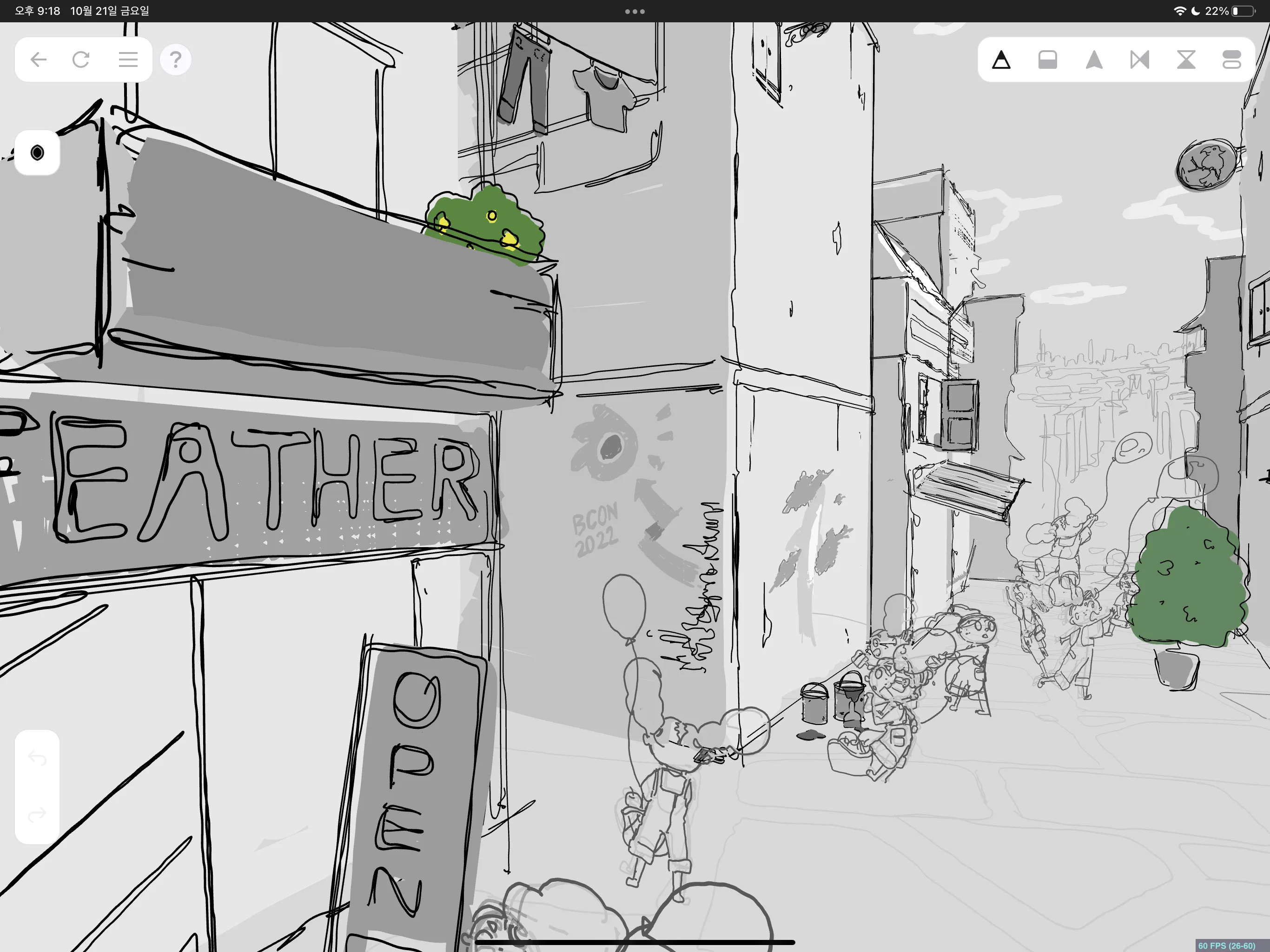
That March, something shook the 3D community: Blender 3.1 was released. A worldwide wave of 3D creation followed, and Feather gradually became better known. We weren't the only ones building tools in this space; other apps and software were being developed with just as much energy.
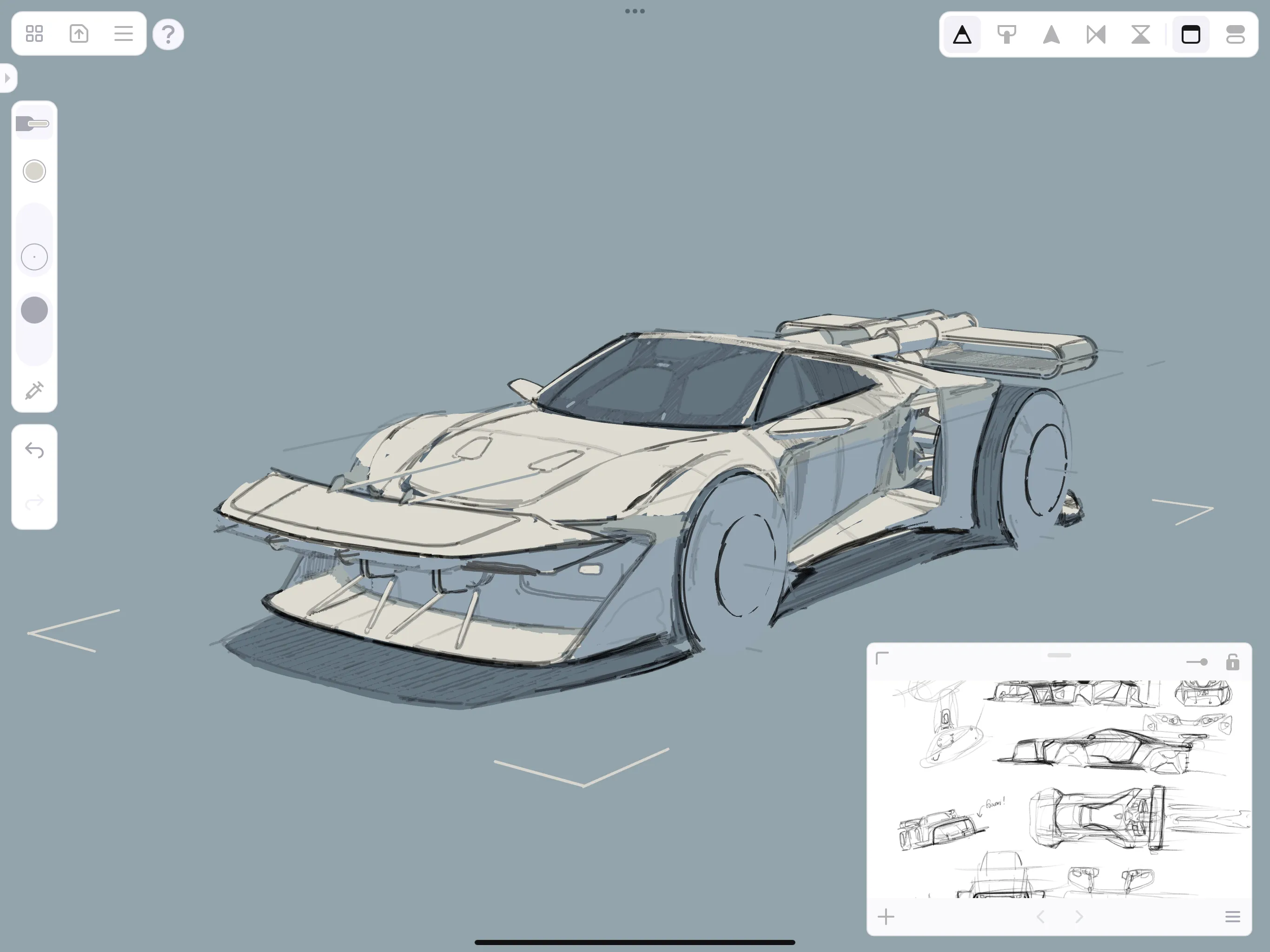
As more people joined us, we heard feedback from all sorts of perspectives. Feather became noticeably easier to use. Over roughly a year, we built most of the features at the heart of 3D sketching. Then Feather reached a turning point. We'd built just about everything we could for drawing 3D curves. What next?
We needed new features, a new concept, and a new vision. It was time to go beyond 3D sketching and build tools for creating.
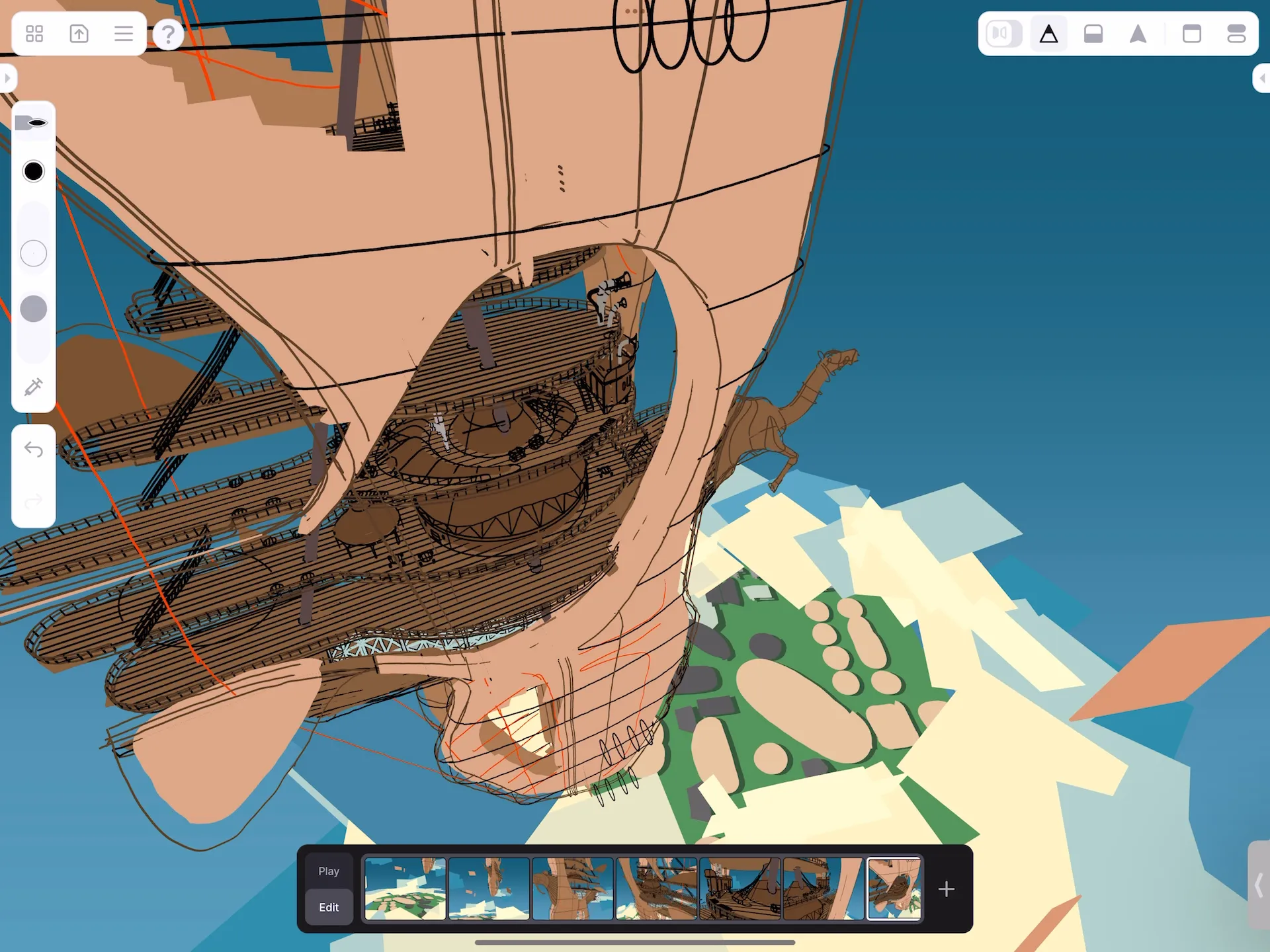
The tagline for version 1.5 was “Paint, Shift and Shoot.” Notice that it doesn't say “drawing” or “sketching.” This was one of our biggest updates, yet the only new features directly related to drawing were a few brushes and Loft. The rest—Sequence, the 3D joystick, 3D Guide opacity—let you adjust or move what you'd already drawn.
The concept wasn't the only thing that changed. We added beautiful example notes and made our emails easier to read. We also made the infamous tutorial where you draw a blue cassette tape. As it turned out, becoming a tool people truly enjoyed using, rather than simply an interesting way to create, would take more than listening to feedback and writing code.
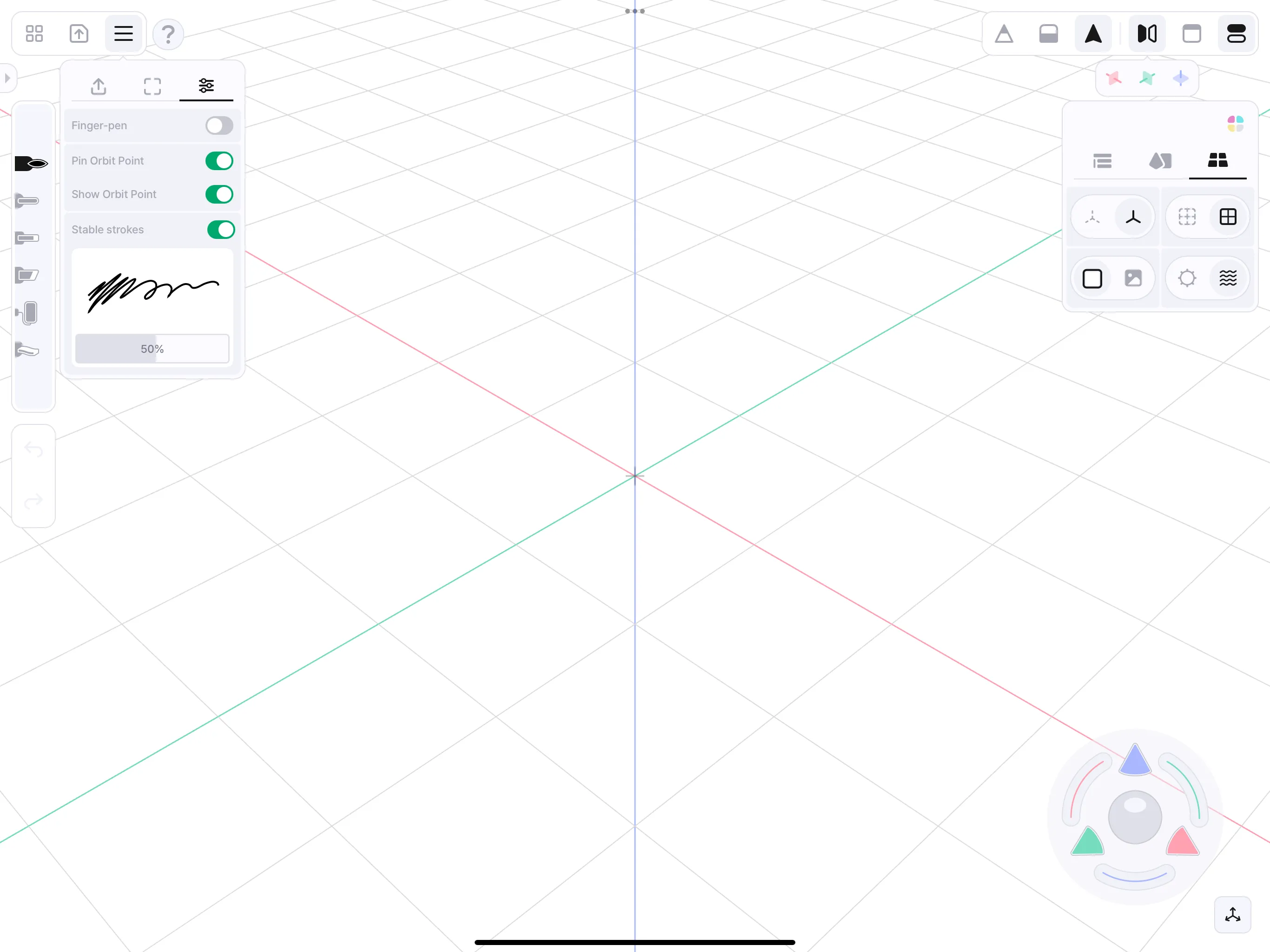
Official Service (2024–Now)
And so our two years of free service ended with version 1.5. We had to decide how Feather would become a paid product.
We discussed all kinds of options: a free tier with paid features, ads in the free version, subscriptions. We got far enough with subscriptions to define the plans and their prices. True to the name Feather, the smallest plan started with a tiny egg. It was adorable. In the end, though, we chose the one-time purchase you know today.
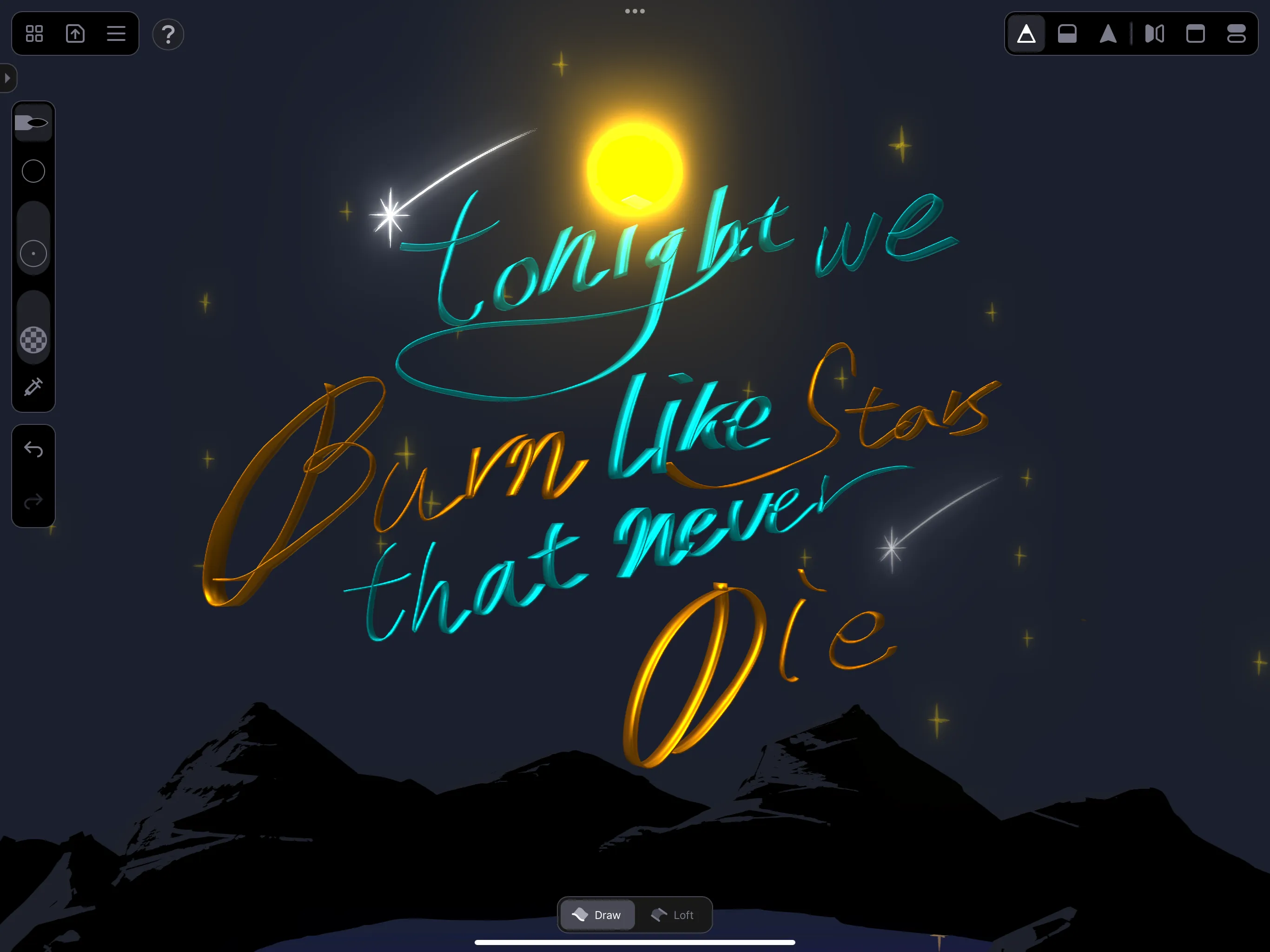
Turning an intriguing free app into a product someone would pay for was a different challenge altogether. We had to raise its overall quality and add features we hadn't managed to include in Legacy 1.5: materials, rendering, Liquify, Dark Mode, and more.
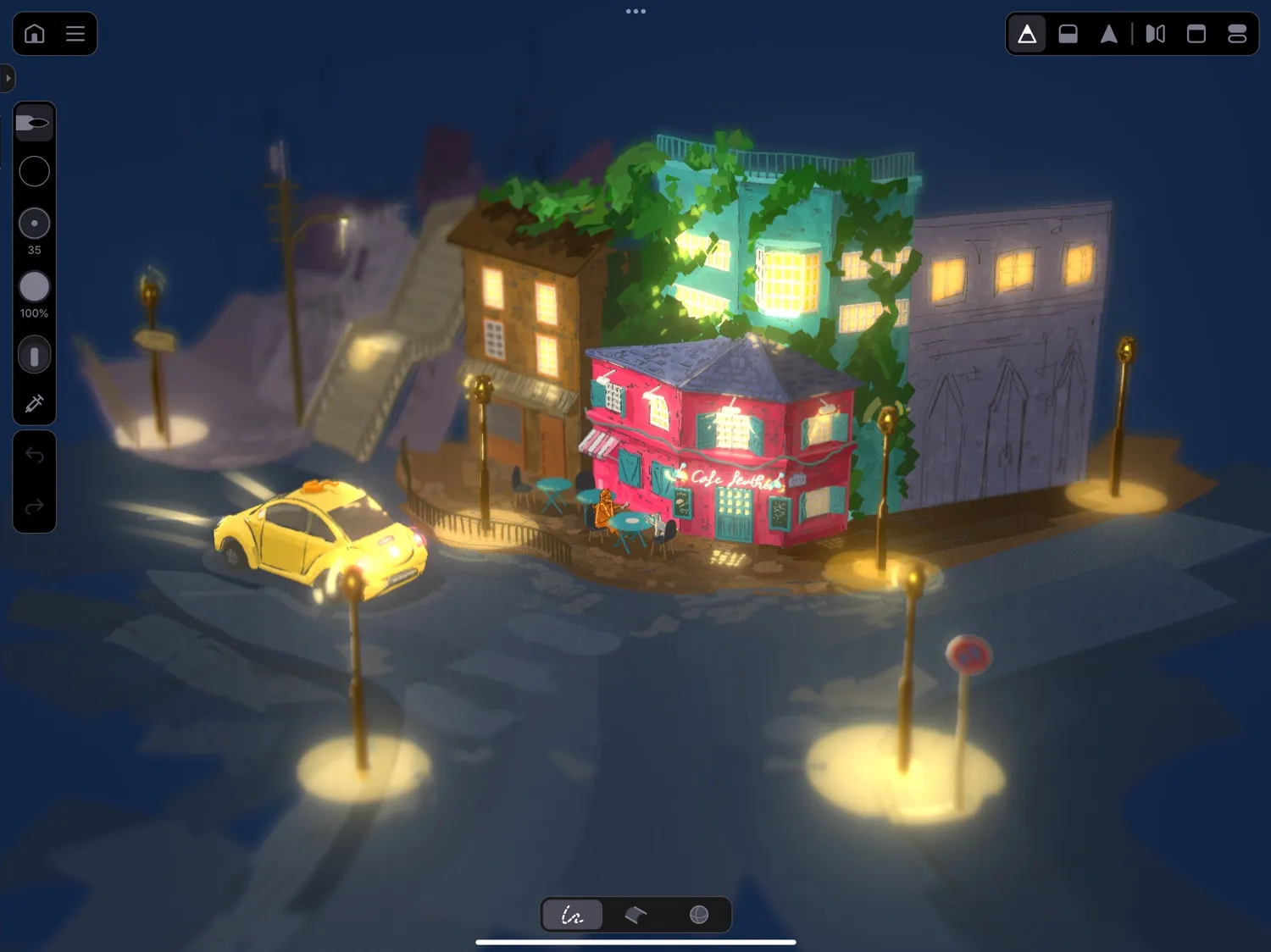
Version 1.0 gave us a great deal. Most importantly, it meant we could keep making Feather. A community grew, and artists and designers began using it in their work. Among them were renowned architects, legendary concept artists, and million-selling comic creators—people we could hardly believe were using our app.
But the people who surprised us most were always the ones creating something for the first time with Feather. The ones who bought their first iPad, peeled the wrapping from their Apple Pencil with anticipation, and chose Feather as the first app they'd pay for. They immediately ran into the wall that was our notorious cassette-tape tutorial. Those who survived went on to make astonishing work and share it in Feather Gallery.
From novice users to professionals, meeting such a wide range of people was a stroke of luck. Inside the team, though, we'd already hit a limit. We felt it the moment 1.0 shipped: we couldn't keep building on this foundation.
Official 1.0 felt like a cup filled so close to the brim that one more drop might spill it. Every update that followed felt much the same. The app worked offline, but underneath it was still built on foundations laid for the web version back in 2021. Web technology has come a long way; today it can handle complex, high-polygon 3D scenes. But it wasn't quite enough for the smooth, natural 3D sketching we were after.
We needed to build an engine. An engine as tough as metal, made for Feather and nothing else.
Future
And here is the first public look at Feather 2.0's main screen.
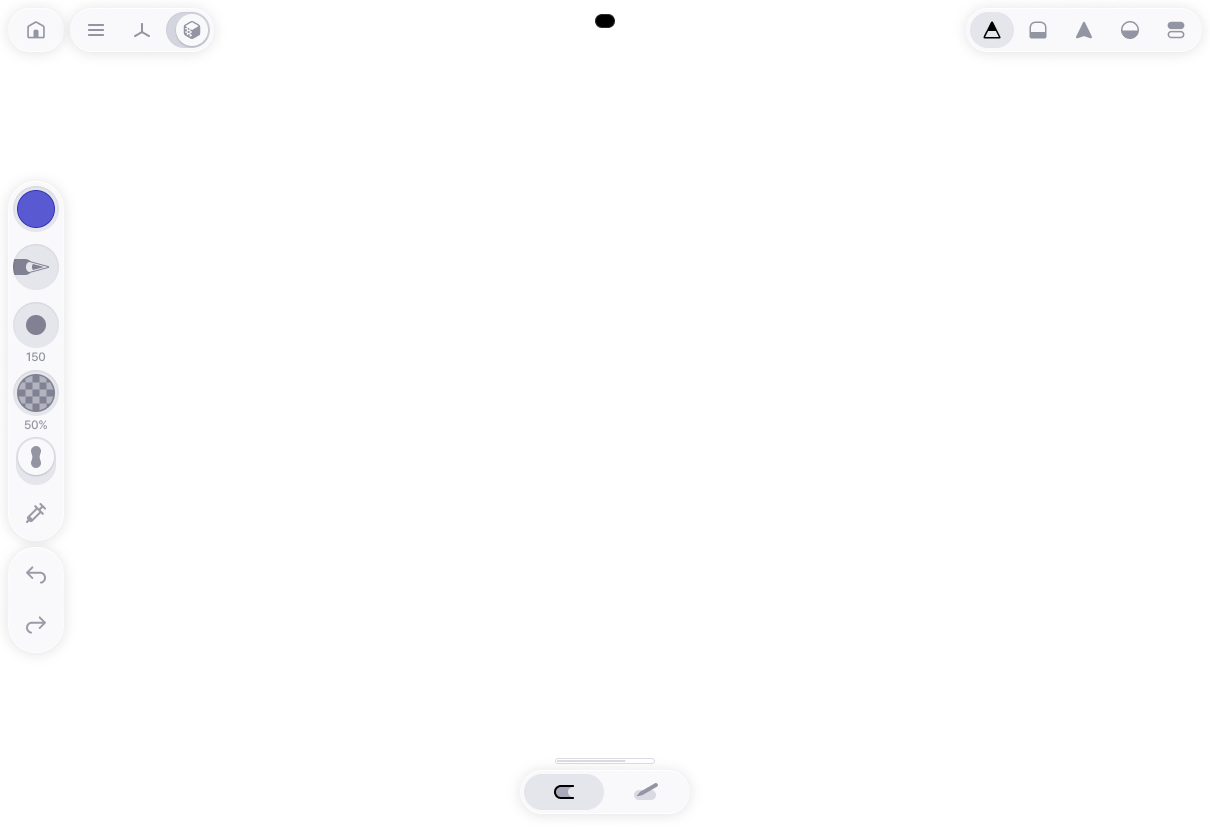
It looks a lot like version 1.3.X, and yet... so much is different. Under the hood, it's almost a different program. Feather 1.3.X runs on WebGL through Three.js. Feather 2.0 runs on our own Airbreath Engine, built on Apple's Metal 4 API.
Airbreath Engine was designed solely for Feather. It is a powerful 3D drawing engine built from the ground up to create 3D geometry through drawing. There aren't many engines designed with that particular purpose at their core.
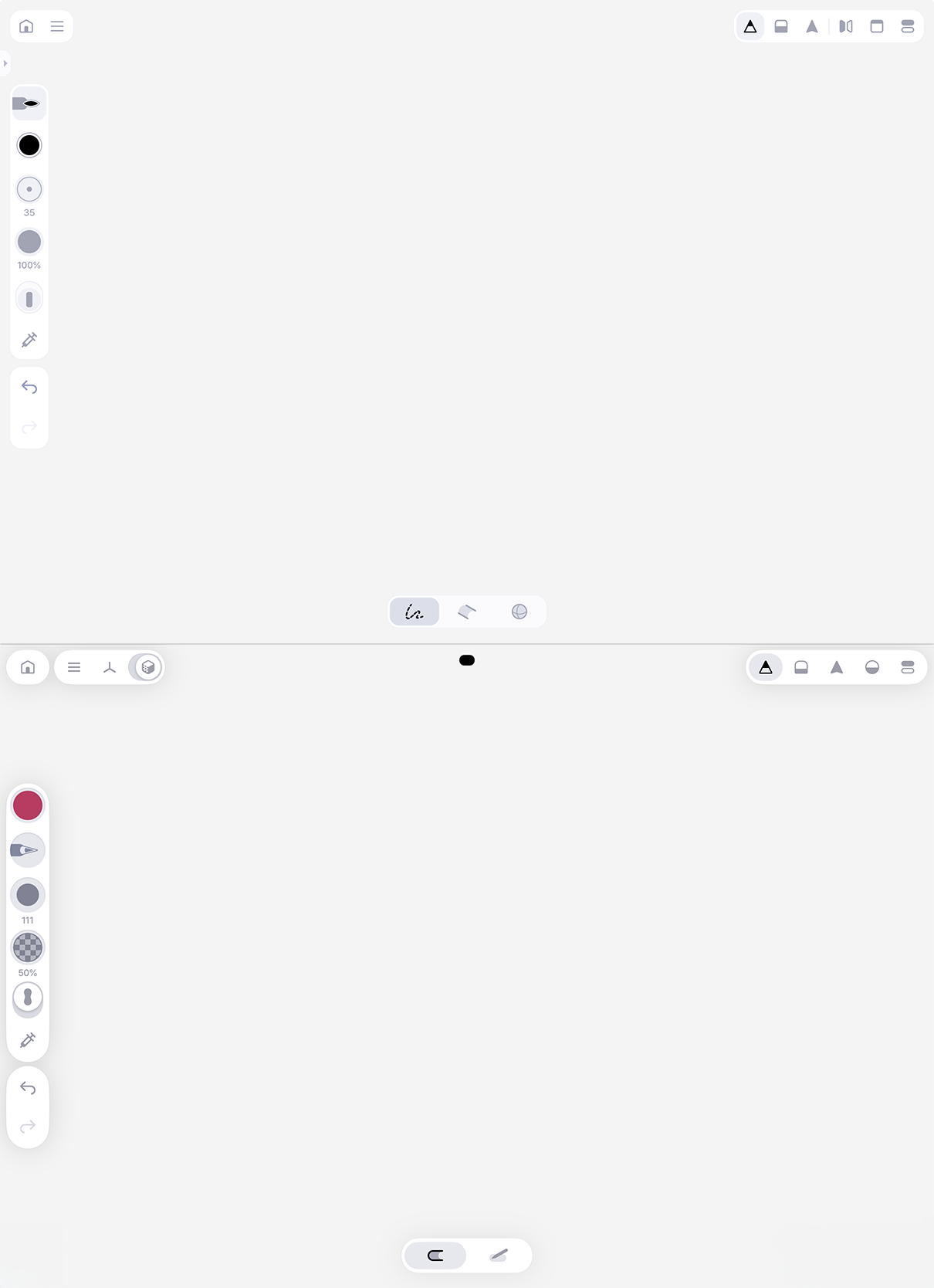
Let's compare them. The current version, Feather 1.3.4, is on top; the 2.0 build we're developing is below. The basic idea remains the same. Home, Menu, and the other tools for managing notes are in the upper left. The upper right looks nearly identical, too: that's where most of the 3D drawing tools live. We've shifted a few buttons in both toolbars to make room for new features and make them easier to use.
The sidebar looks familiar as well. But with features such as brush customization and a material library coming in 2.0, most of the panels that open when you tap those buttons have been redesigned.
The 3D Guide menu at the bottom has changed completely. So has the way you use it—and its name. The 3D Guide is now the Drawing Surface. Yes, we finally noticed that almost nobody has called it a “3D Guide” for the past two years. A few of you did, to be fair. Most people went with “the surface,” “that surface,” or “that weird surface,” depending on the day. So we changed the name to Drawing Surface. Our current nightmare is that, now we've renamed it, everyone will suddenly start calling it a 3D Guide. Please don't let that happen.
And one last point worth pointing out: the little black point at the top of the screen. We call this little guy Inkling. What does it do? That's a secret for now. You'll see it in a video we're sharing later!
So far...
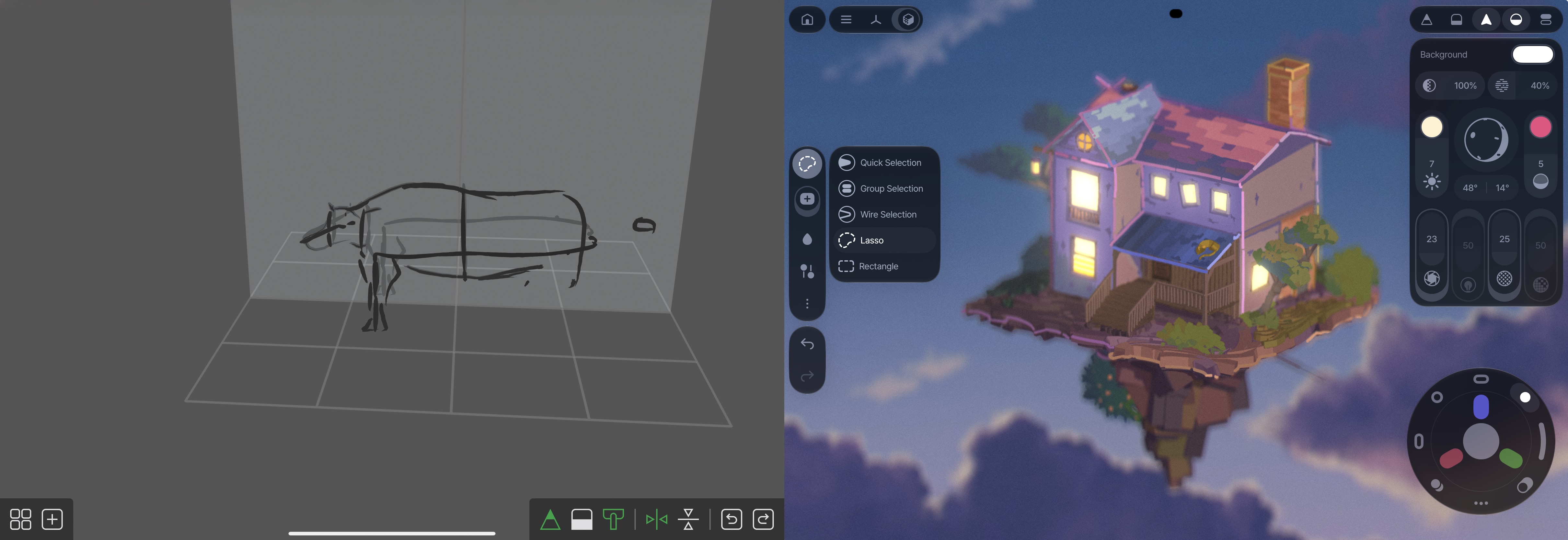
Let's compare that first alpha build with the version we're working on now. Wow. Side by side, they look about 30 years apart! It's really only been about six. Even people on the team who've been here for years don't remember exactly what those early Feathers looked like. That's only natural. Nobody walks forward staring at their own footprints. Sometimes you have to turn around to see the path you've made.
Big changes always come with some worry. No one can promise that every change is the right one, and that weighs on us. Looking back helps us remember where we came from, where we got lost, and where we were trying to go all along. We took a few wrong turns, but from the beginning, Feather has kept its eyes on one thing: drawing in 3D.
Thank you for waiting for Feather 2.0. See you soon!